Our four week practice schedule ends with a clear sequence: learn in focused blocks, then finish with mixed drilling. The drills guide and the practice mistakes piece add that uniform random dealing wastes most repetitions once accuracy is high, and the advice holds together. What those pieces explain only in passing is why the order matters, and without the reason, the sequence looks like a stylistic preference rather than a structural one.
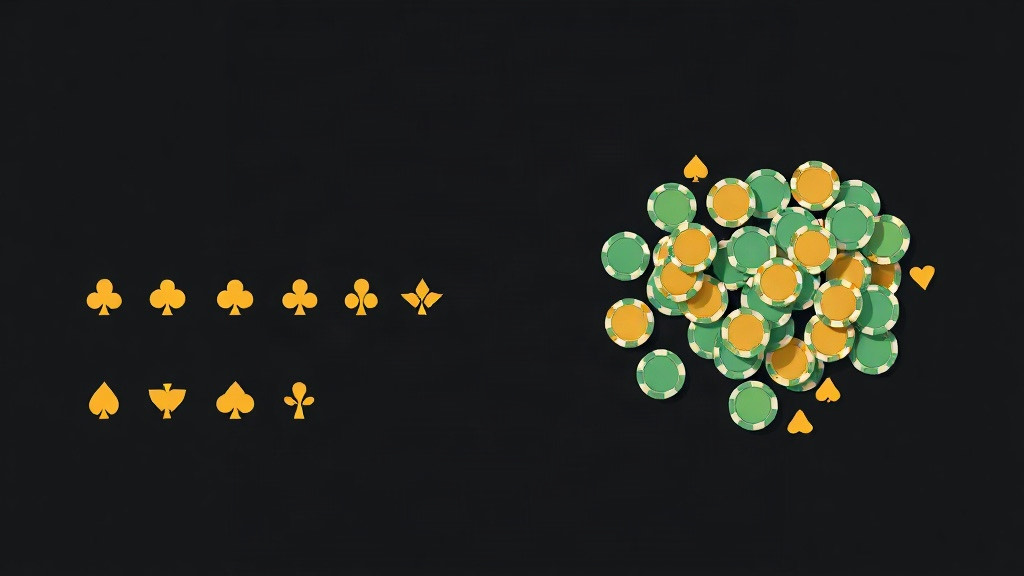
The difference between the two modes is easy to state. Blocked practice deals one category at a time: only soft hands, only pairs, only hard totals, or only one dealer upcard. Mixed practice deals every category in random order, with no signal about what is coming. Learning researchers study this contrast under the name interleaving. This article is about what interleaving buys in blackjack specifically, and where blocked practice still wins.
A block gives away the category
At a real table, the first decision on every hand is not what to do. It is what you are holding. Is this total soft or hard? Is it a pair? Which chart section does it belong to? Only after that classification does the chart cell apply. The classification is usually instant, but it is a step, and on multi-card hands it is a step people get wrong under pressure: an ace, a 4 and a 2 is a soft 17, and it is easy to misread as a hard 17, the problem behind our piece on spotting soft hands instantly.
Blocked practice never trains that step, because the block answers it in advance. In a session of nothing but soft hands, knowing the hand is soft costs nothing; the drill told you before the cards appeared. Every repetition in the block practices the second half of the skill, the play, while the first half, the recognition, goes untested. That is not a flaw in blocked practice. It is simply what a block is: a device for isolating one component. It becomes a flaw when blocked work is the only kind you do.
Mixed practice forces the classification on every hand. The deal gives you 8,4,3 and you have to notice, before anything else, that you hold a hard 15 rather than a soft anything. A,6 arrives and the soft classification is yours to make, unannounced. The recognition step gets exactly as many repetitions as the decision step, which is the ratio a real table demands.
Why blocked sessions can flatter you
There is a second consequence, and it deserves a caution rather than a claim. A blocked session can feel smoother and show higher accuracy than a mixed one over the same hands. Part of that is genuine skill: repetition inside one category does build recall. But part of it is the category label doing work that your own recognition should do, plus the rhythm of a block, where consecutive hands share a logic and each one primes the next. Treat a high blocked accuracy as a stage result, not a table result.
The honest test is mixed accuracy at a realistic pace, and the gap between the two numbers is itself information. A small gap suggests the categories are solid and mostly need maintenance. A large gap suggests recognition, not recall, is the weak layer, which more blocked repetitions will not train; mixed practice will. This is one of the quiet ways learners stall, and it fits the pattern described in when practice stops working: the practice you find comfortable is often not the practice you need.
 21 TrainerFree on the App Store. Instant right or wrong feedback with a clear explanation on every hand.
Get the app
21 TrainerFree on the App Store. Instant right or wrong feedback with a clear explanation on every hand.
Get the app
When blocked practice is the right tool
None of this makes blocks the enemy. Three situations call for them, and the first is new material. Installing a fresh category, soft hands say, is easier one category at a time because the shared logic of consecutive hands compounds: every explanation you read applies to the next hand too. The second is rare cells, and pairs are the canonical case. Per our starting hand frequencies piece, in a six deck game all non-ten pairs together account for about 5 percent of hands, and any specific non-ten pair arrives about once every 176 hands. A mixed drill that mirrors the game's real frequencies deals each specific pair so rarely that it barely gets refreshed, which is exactly the argument of drilling pair splits: some cells need to be dealt on purpose.
The third is one repeating error. If your log says the same two or three cells keep going wrong, a short block aimed at those cells, of the kind a practice log points to, is the efficient fix. The block is a scalpel: new material, rare cells, a named error. Everything else is mixed territory.
A bridge between the two: mix confusables first
The jump from pure blocks to fully mixed drilling is large, and there is a useful middle step: mix only the categories that get confused with each other, then mix everything. Confusable pairs of hands are the ones that share a total or a look while belonging to different chart sections, and drilling them side by side makes the distinction itself the object of practice.
Three examples, with every cell taken from the four to eight deck chart where the dealer stands on soft 17. Soft 18 against hard 18: the hard 18 always stands, while the soft 18 doubles against a 3 through 6, hits against a 9, 10 and ace, and stands elsewhere. The pair 9,9 against a hard 18: identical totals, different treatment, since 9,9 splits against everything except a 7, a 10 and an ace, where it stands, while a hard 18 never splits because it is not a pair at all. And 5,5 against a hard 10: here the confusion runs the other direction, because the answer is the same. The 5,5 is a hard 10, doubles against a 2 through 9, and is never split, and drilling the two together teaches the rule that fives are a total, not a pair.
A session built from those contrasts, dealt in random order, keeps the recognition step loaded while holding the material to two categories at a time. Once confusables separate cleanly, widen the mix to the whole chart.
Weighted mixing, and where the app fits
Between pure blocks and pure random dealing there is a third option: mixed practice weighted toward the hands that need work. The Weakness Drill in 21 Trainer's Pro upgrade applies a version of this idea: it finds and drills your weakest hands, and the accuracy heat maps, also Pro, show where your errors cluster by hand type and dealer upcard. The free dealt-hand trainer gives instant right or wrong feedback with an explanation on every decision, so a mixed session is always also a diagnostic. The app does not claim to replace the sequence: blocks install, mixed drilling tests, and weighted mixing is the loop that connects them.
Speed is the last variable, and it belongs at the end. Recognition under a clock is a different skill from recognition at leisure, and decision speed is a gap many home learners never close. Add pace only after mixed accuracy is stable; adding it earlier just trains fast mistakes. Some learners also pair mixed drilling with flashcards for the cells that refuse to stick, which is a reasonable division of labor: cards for recall, mixed deals for everything else.
Mix it upDealt hands with instant feedback and an explanation for every decision. No account, no ads, and your progress stays on your device.
Download
Frequently asked questions
Is blocked or mixed practice better for learning blackjack strategy?
Both, in order. Blocked practice, one hand category at a time, is the efficient way to install new material and to reach rare hands. Mixed practice, every category in random order, is the only mode that trains recognizing what kind of hand you hold before deciding what to do with it. Learn in blocks, then make mixed drilling the default and blocked work the exception.
Why does mixed practice feel harder than blocked practice?
Because a block quietly does part of the work for you. In a session of only soft hands, knowing the hand is soft costs nothing; you never practice noticing it. A mixed deal forces that classification on every single hand, and it also removes the rhythm that lets you answer on autopilot. Feeling harder is not a sign the practice is worse; it is a sign more steps are being exercised.
Should you drill only pair hands for a while?
Yes, temporarily. In a six deck game all non-ten pairs together come up about 5 percent of the time, and any specific non-ten pair about one hand in 176, so random dealing gives those cells a cameo rather than repetition. A focused block of pair hands builds recall that mixed practice then maintains. Return to mixed drilling once the pair decisions are automatic.
Why do you keep confusing soft 18 and hard 18?
Because both totals read as 18 at a glance, but the chart treats them differently. In a four to eight deck game with the dealer standing on soft 17, a hard 18 always stands, while soft 18 doubles against a 3 through 6, hits against a 9, 10 and ace, and stands elsewhere. The fix is deliberate contrast practice: alternate the two hands in one session so the difference is the thing being drilled, not an accident of the deal.
How do you practice your weakest hands in 21 Trainer?
The Pro upgrade includes a Weakness Drill that finds and drills your weakest hands, and accuracy heat maps by hand type and dealer upcard that show where errors cluster. Every dealt hand, free or Pro, gives instant right or wrong feedback with an explanation of the decision, so a mixed session doubles as a running diagnostic of which cells still need blocked work.